Mount Hope Bay weather
Fall River sits on Mount Hope Bay where the Taunton River meets salt water, so winters are cold, damp and windy. Older heating systems can swing indoor air from very dry to quite humid depending on the unit. Damp shoulder seasons slow drying in rooms without good airflow. Bathrooms and kitchens deserve a moisture-resistant board when they are opened, and a quality primer helps the finish hold up against condensation on cold exterior walls.
Fall River triple-deckers and mill buildings
Fall River grew around granite textile mills, and its hills are lined with triple-decker apartment houses built in the late 1800s and early 1900s. The Highlands, Flint Village, the South End and Maplewood all have streets of these three-family homes. Interiors usually started with plaster on wood lath, and many apartments have been patched or partly covered with board over a century of tenants. Former mill complexes along the Quequechan River now house apartments, studios and small businesses.
Bathrooms stacked over living rooms
With three units stacked on top of each other, a common repair is a ceiling below an upstairs bathroom or kitchen. Finding and correcting the leak comes first, and that may involve a plumber and the owner of the unit above. Once the area is dry, damaged plaster or board is cut back to sound material and replaced. The patch then has to sit flush with surrounding plaster, which often means a skim coat across a wider area of the ceiling.
What gets decided up front
When the history of a repair is uncertain, note when it became visible and whether its appearance has altered across different seasons.
For a planned new wall mounted fixture, resolve its backing requirements while the cavity remains open instead of cutting into completed drywall later.
Review the whole assembly
Acoustic performance depends on framing, insulation, panel layers and perimeter details working together. Select a suitable tested or documented wall system instead of combining unrelated marketing specifications.
Inspect supporting framing
An uneven support plane can remain apparent after new gypsum panels are attached. Deal with significant framing irregularities while the structure is exposed, before the boards conceal it.
Assess material condition
Look for changes in panel strength and face condition as well as the visible color of a mark. The visible mark does not always show the full extent of the affected cavity.
Identify the cause
A dent from moving furniture calls for a differing repair than a joint that repeatedly opens beside a door. Check whether the wall surface feels firm and whether the defect has changed since it first appeared.
Define the smoothing target
Flattening a light texture is differing from correcting deep waves across an entire wall. The scope should describe what the skim is expected to improve and what remains outside that finish treatment.
Separate specialist work
Confirmed hazardous material removal is not an ordinary drywall scraping task. A suitable specialist should define containment, handling and disposal before any finish restoration is planned.
About the illustrations
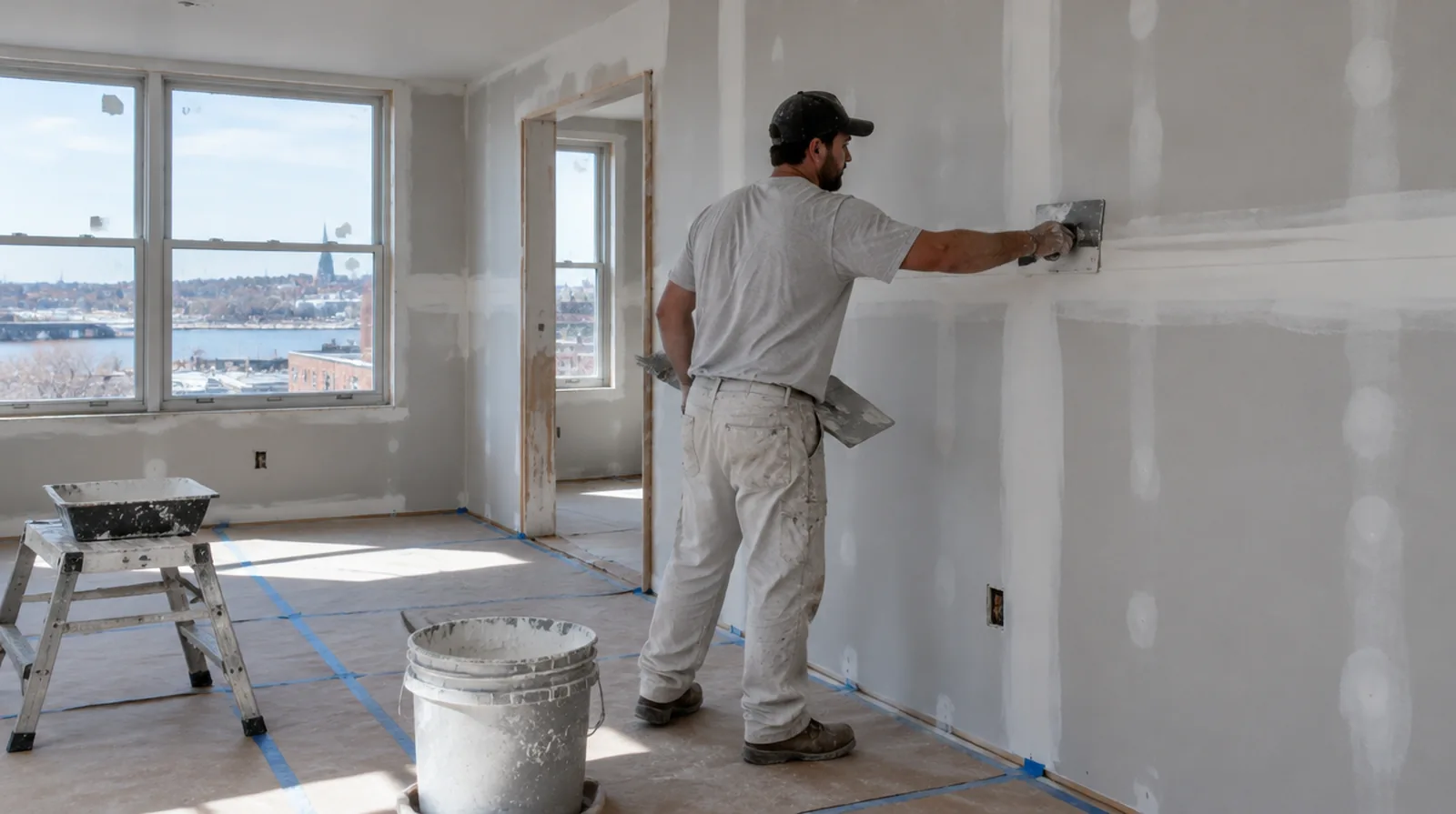
The website images are generated examples of drywall interiors and methods, not photographs of completed customer work. No customer reviews or qualifications are implied. The project form and the telephone shown on this page connect you with the next project conversation.
Explore the drywall services or view the address and map.
More planning details for Fall River
Painting the entire ceiling after a repair usually blends better than trying to touch up an aged white surface. In a Fall River triple-decker, a ceiling stain on the first floor often traces back to a bathroom two levels up. A moisture-resistant board and a good primer help kitchen and bathroom ceilings stand up to condensation.