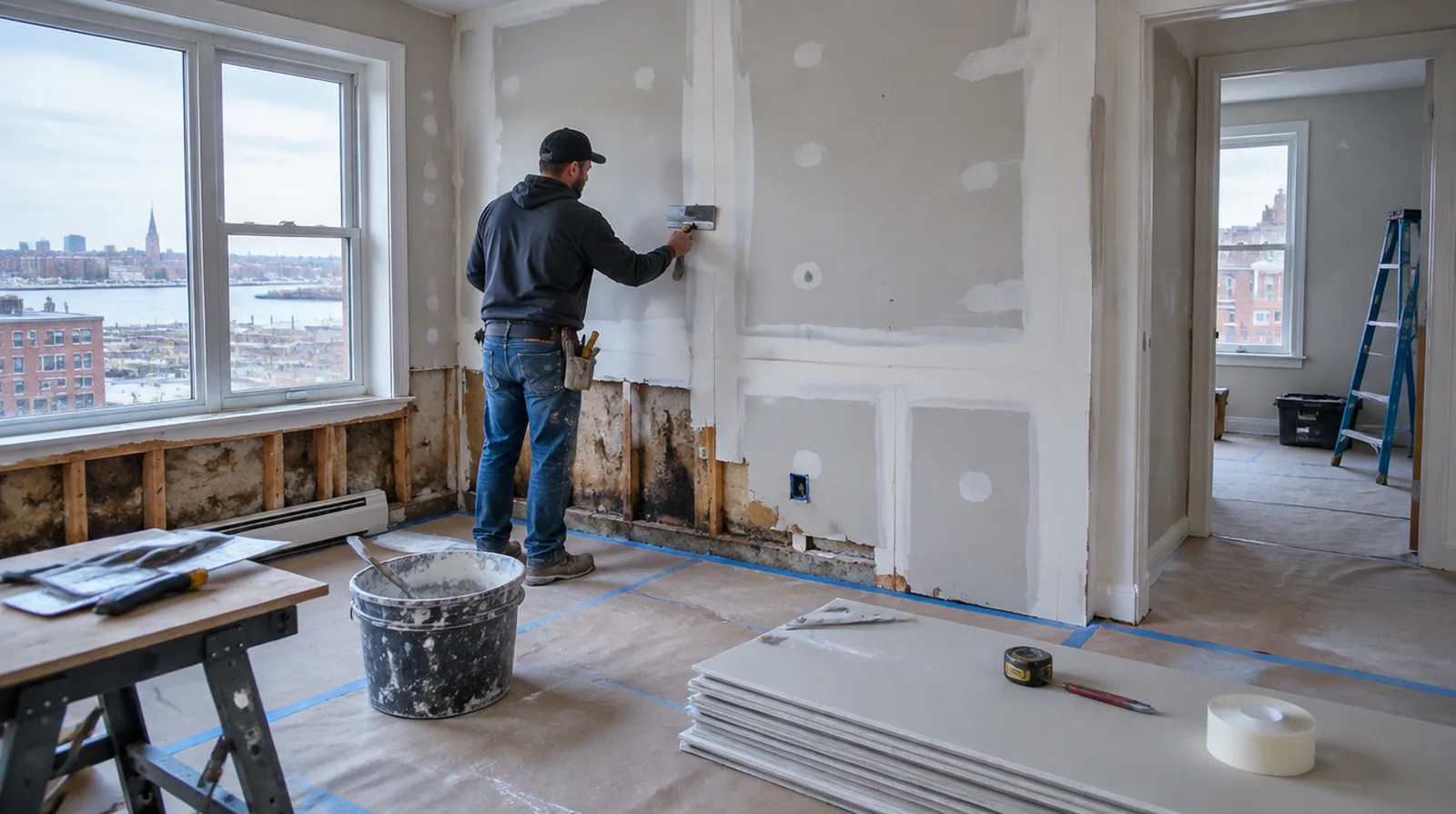
Agree on decorative boundaries
Repairing the damaged board and restoring a uniform decorative finish are related but distinct tasks. A ceiling or wall repaint could have to extend beyond the removed section to look consistent. For an initial assessment from pictures, provide an overall room photograph and a detailed view of the defect so both context and scale are apparent.
Keep contamination separate
Flood water and suspected microbial growth require evaluation beyond ordinary cosmetic patching. Ask an appropriate remediation professional about containment and material handling before drywall work is scheduled. If the wall surface work belongs to a broader renovation, coordinate its order with flooring, cabinetry and trim rather than scheduling finishing in isolation.
Inspect concealed components
Other components revealed by removal could need attention that is not included in panel replacement. Those decisions should be resolved before the drywall portion of the repair moves forward. For a room with restricted airflow, plan drying conditions alongside dust protection and the comfort of people occupying neighboring spaces.
Treat remaining discoloration
Suitable primer may be needed to prevent old water marks from bleeding through the new paint. Confirm that the stain is inactive before choosing a coating system for the repaired surface. While a removed panel exposes the wall surface cavity, complete the necessary review of concealed work before replacement board closes the opening.
Assess material condition
Look for changes in panel strength and face condition as well as the visible color of a mark. The visible mark does not always show the full extent of the affected cavity. When the decorative coating has been selected, tell the finisher its intended sheen and color while the surface preparation standard is still being agreed.
Resolve the water source
Replacement drywall should follow correction of the leak, condensation or other source that caused the damage. A cosmetic cover will not stop water from entering the same assembly again. When damage followed other building work, describe the nearby alterations and the sequence between those changes and the first visible defect.
Match the board assembly
Replacement board should suit the original thickness and any applicable wall or ceiling assembly requirements. Water resistant products do not remove the need to correct the conditions that caused the damage. If access passes through a shared space, arrange protection and a delivery route that do not unnecessarily obstruct other occupants.
Record the completed scope
Retain useful information about source repairs, material replacement and any drying checks performed by other trades. This record helps explain what the drywall repair covered and what maintenance remains the property owner responsibility. When reviewing the finished work, use the agreed lighting and natural room viewpoints so the assessment reflects the intended use of the space.
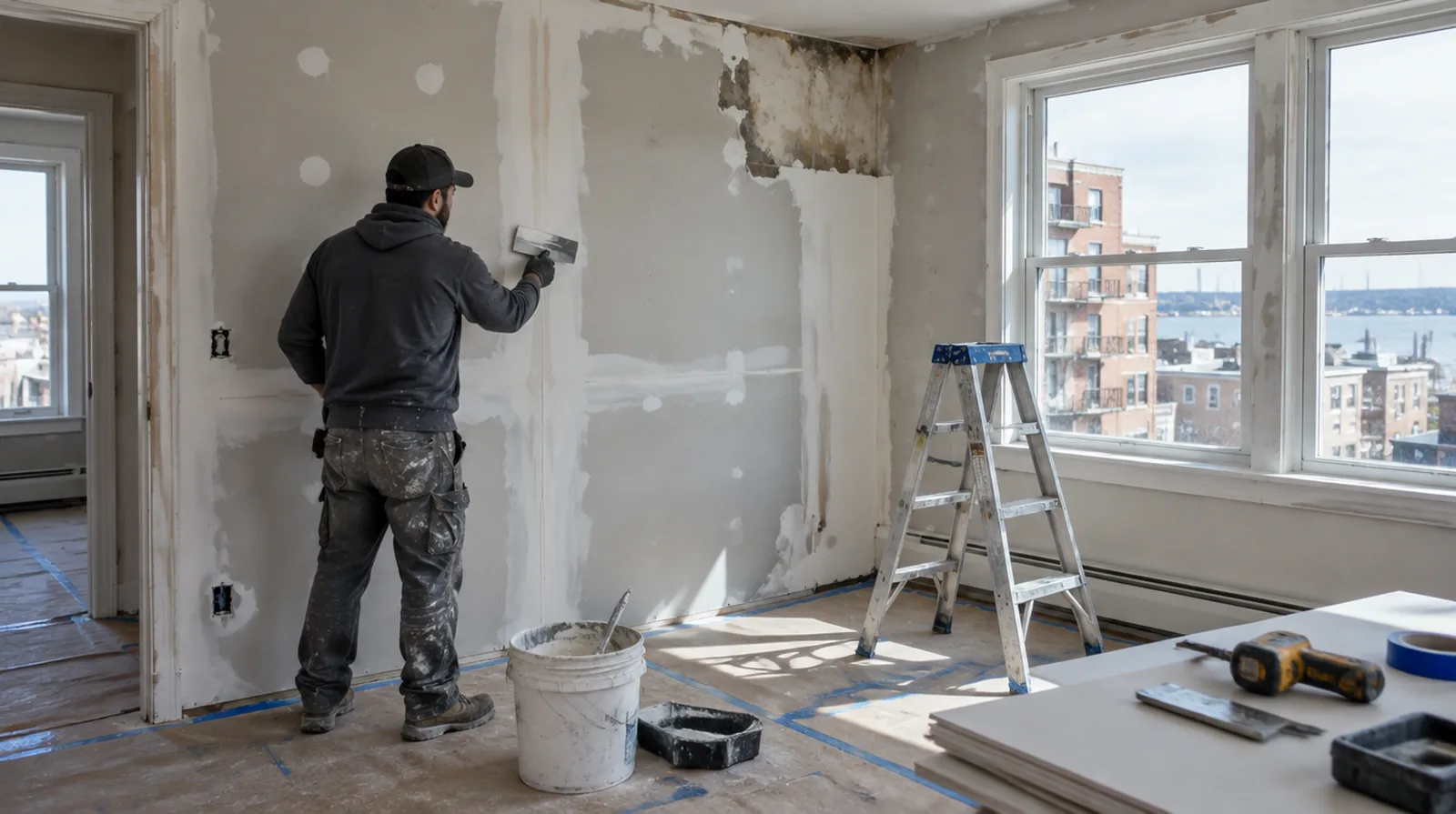
Finish after moisture control
Tape and joint compound belong on stable dry material rather than a damp or deteriorating substrate. Allow adequate time for each coat instead of sealing moisture beneath the next stage. Before comparing two proposals, check that both include the same protection, finishing and cleanup boundaries instead of comparing totals alone.
Define selective removal
A planned removal area opens the assembly for evaluation without automatically stripping every adjacent surface. The cut boundary also needs to accommodate backing and a workable finishing transition. When building management controls access, agree delivery hours and common area protection before committing to a start or finish date.
Project context in Fall River
A ceiling patch beside an old plaster medallion or crown needs careful masking to avoid damaging the detail. Converted mill spaces along the Quequechan River often pair brick walls with new partitions that meet at uneven edges.
Scope questions before finishing
When the same defect has returned, share information about previous repair methods so the next assessment can consider why they did not last.
If occupancy must resume on a certain day, include the later primer and paint stages in the timetable as well as drywall installation and finishing.
If a household member is sensitive to dust, discuss containment and cleaning expectations before choosing how to stage the room work.
Where the quoted work stops before painting, request a clear description of what remains so the next decorating stage can be priced realistically.
For a project involving a building manager, confirm access hours and protection requirements before promising a start date or a short completion window.
For a room with restricted airflow, plan drying conditions alongside dust protection and the comfort of people occupying neighboring spaces.
Where a future fixture will be installed, coordinate any required backing while the cavity is accessible instead of reopening the completed wall.
If the surface condition is uncertain, allow for an assessment that can distinguish stable material from layers that should never be covered.
For a surface that will receive wall covering, share the product requirements early so the finishing stage supports the planned decorative treatment.
When painting is outside the proposal, describe the remaining decorative preparation clearly so another contractor can price that stage accurately.
When a quote includes multiple visits, ask what happens during each stage and when the space needs to remain undisturbed between coats.
For a limited patch requiring substantial setup, assess the complete package of access and protection rather than relating cost only to the opening size.
Explore the Fall River drywall overview for related options, or read the project planning information before arranging the next stage.
More planning details for Fall River
Original plaster in older Fall River apartments usually needs a wider skim so a new patch sits flush. A moisture-resistant board and a good primer help kitchen and bathroom ceilings stand up to condensation. Damp air off Mount Hope Bay slows drying in rooms with closed windows and older heating.