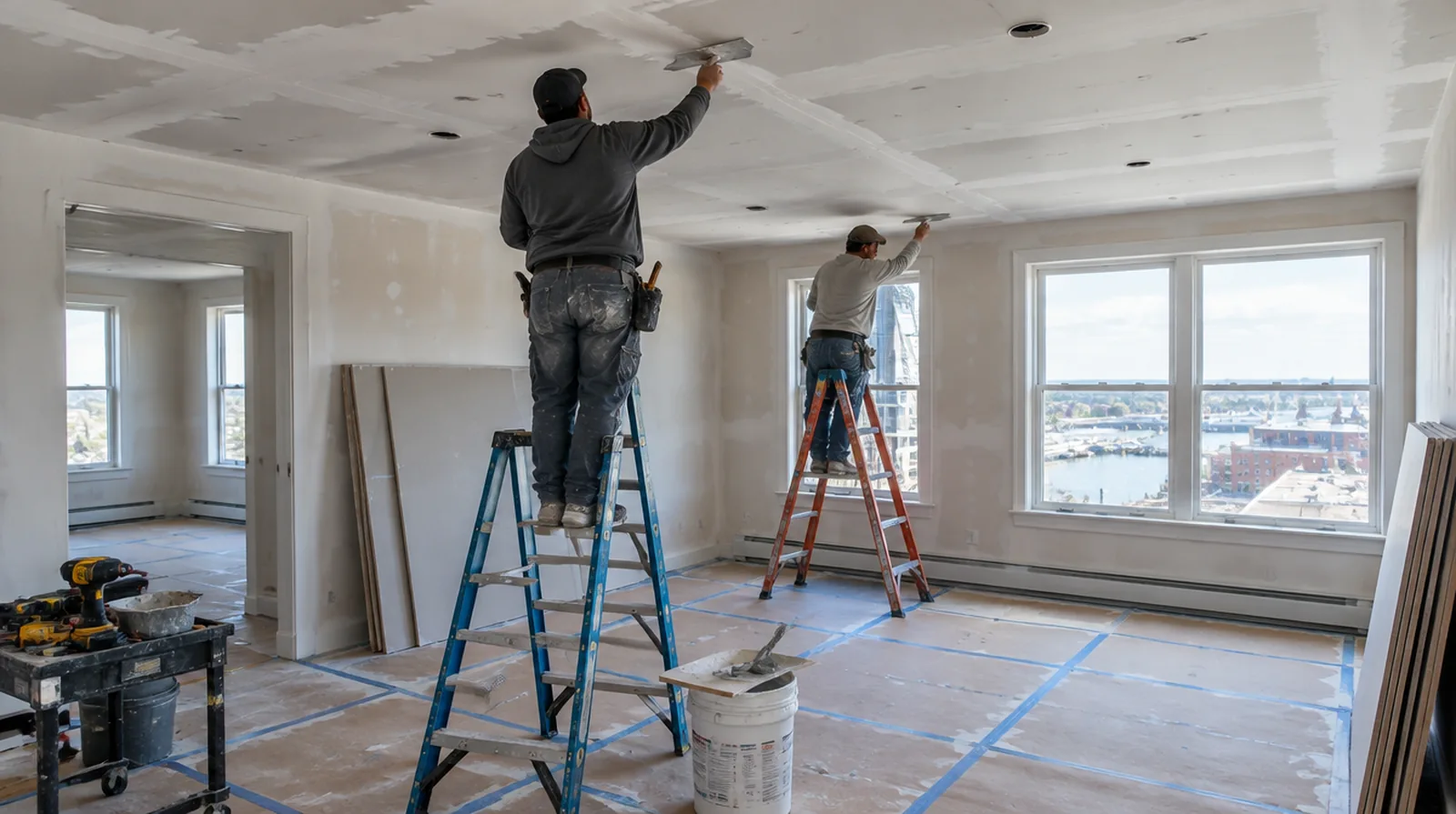
Set the repainting scope
A small fresh white patch can stand out against an older ceiling even when the surface is level. Painting to a natural boundary may be preferable to touching up only the repair. Where existing floors will remain, specify protective measures and review the path used by panels, equipment and finishing tools.
Identify the existing surface
Check whether the overhead finish is gypsum board, plaster or a mixture of older layers. The right repair depends on that actual construction rather than the color of its painted face. When the same defect has returned, share information about previous repair methods so the next assessment can consider why they did not last.
Discuss texture expectations
Determine whether the restored area should be smooth or carry a current decorative pattern. A representative sample makes it easier to judge whether the current pattern can be blended locally. For a room that stays in use, set a workable boundary around construction while retaining the access people need for normal daily activities.
Evaluate sagging sections
A sagging ceiling needs its supports, fixings and damaged materials assessed, not simply smoothed. Avoid using the area beneath a potentially unstable section until it has been evaluated appropriately. When damage followed other building work, describe the nearby alterations and the sequence between those changes and the first visible defect.
Treat the joints overhead
Tape and compound reinforce the patch boundary while successive coats build a broad shallow blend. Because windows often light ceilings obliquely, a narrow raised blend can remain conspicuous. Where flooring is staying in place, agree on protective coverings and check that tools and material handling will not damage the noticeable finish.
Address isolated stains
A dry repaired ceiling may still need a compatible stain blocking primer before decorative paint. Verify that the source is no longer active instead of treating primer as a remedy for damp material. If there is a fixed move in date, reserve adequate time for the coating stages after drywall work rather than counting only the installation period.
Separate fixtures from board work
Electrical fittings, sprinkler components and mechanical grilles can involve other trades or building approvals. Assign removal and reinstatement responsibilities for any fitting that blocks safe repair access. If the surface condition is uncertain, allow for an assessment that can distinguish stable material from layers that should not be covered.
Add reliable backing
A ceiling patch needs fastening support on its edges rather than relying on compound to carry its weight. Matching the board thickness helps avoid a visible step between old and new surfaces. When a paint contractor follows the drywall work, define the surface condition being handed over and decide who handles any minor final touch ups.
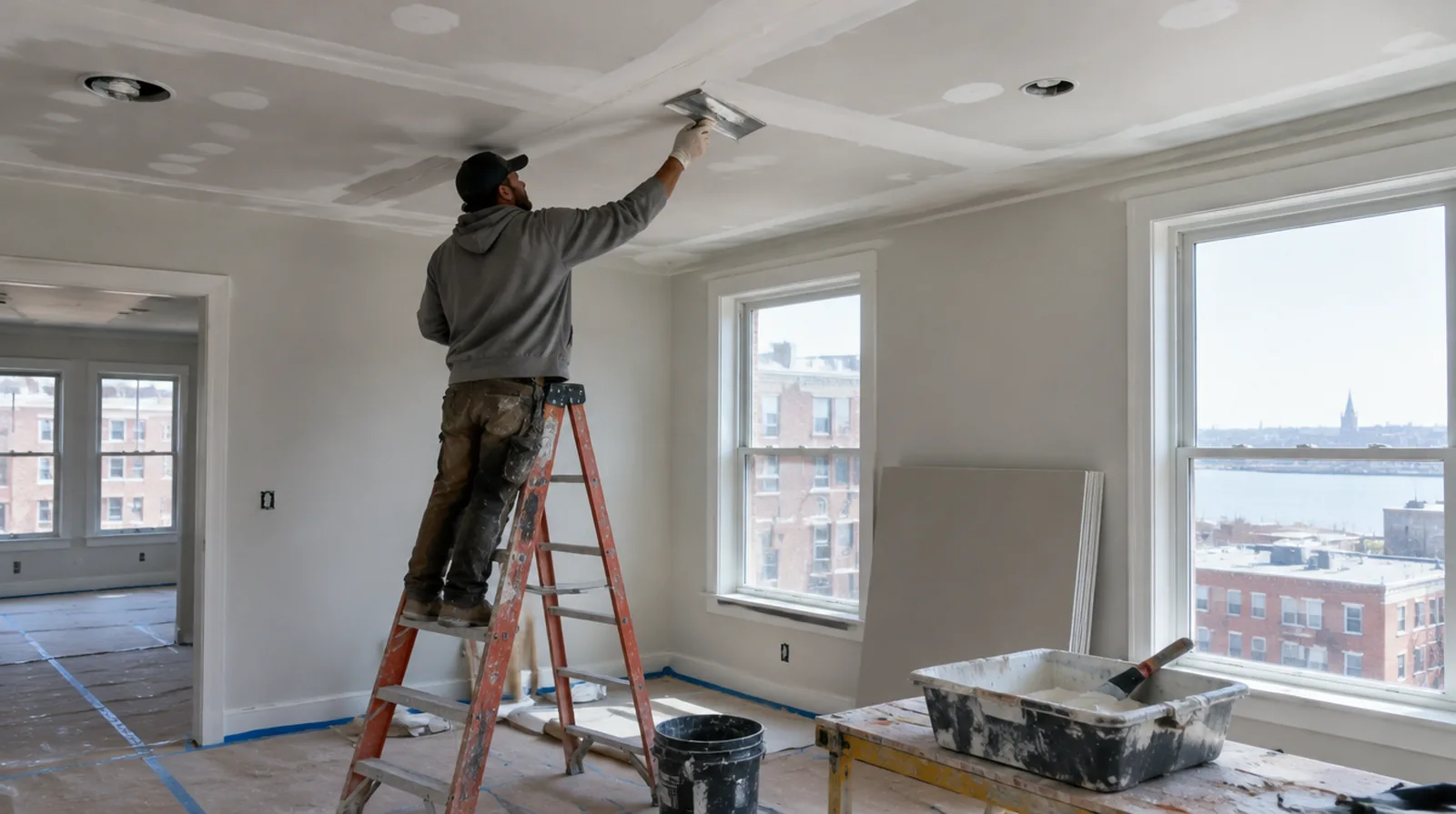
Check the source of damage
A ceiling stain or soft area may be caused by plumbing or another moisture source above the room. The cause needs resolution before cosmetic repair can reasonably be expected to last. If the problem developed after another renovation, explain which nearby materials or building systems changed before the damage became visible.
Review the room after drying
Once the coats are dry, view the ceiling from normal room positions and near its principal windows. Record any remaining paint preparation before the protection comes down and the interior returns to use. If the surface condition is uncertain, allow for an assessment that can distinguish stable material from layers that should never be covered.
Project context in Fall River
Painting the entire ceiling after a repair usually blends better than trying to touch up an aged white surface. Tenants on other floors may need the stairway clear at set times, which affects delivery and cleanup.
Scope questions before finishing
For a repair that crosses several surfaces, measure the affected planes separately so the estimate can explain where each finishing treatment starts and stops.
When concealed damage is possible, establish how additional findings and any proposed removal will be recorded before the scope changes.
For a wall receiving a decorative covering, provide its preparation requirements early adequate for the drywall finish to support that product.
Where existing floors will remain, specify protective measures and review the path used by panels, equipment and finishing tools.
If a household member is sensitive to dust, discuss containment and cleaning expectations before choosing how to stage the interior work.
For a small repair with extensive setup, compare the total scope rather than assuming the price should follow the hole dimensions alone.
At an edge beside built in furniture, state whether the obstruction will be removed or whether finishing stops at the section that can be reached.
For a limited patch requiring substantial setup, assess the complete package of access and protection rather than relating cost only to the opening size.
For walls beside bright windows, review a dry sample from an oblique angle as well as looking straight at the repaired surface.
When damage followed other building work, describe the nearby alterations and the sequence between those changes and the first noticeable defect.
If the surface condition is uncertain, allow for an assessment that can distinguish stable material from layers that ought not to be covered.
If the ceiling or wall includes fittings, identify the person responsible for removing and reinstalling each item before the work begins.
Explore the Fall River drywall overview for related options, or read the project planning information before arranging the next stage.
More planning details for Fall River
In a Fall River triple-decker, a ceiling stain on the first floor often traces back to a bathroom two levels up. Damp air off Mount Hope Bay slows drying in rooms with closed windows and older heating. Original plaster in older Fall River apartments usually needs a wider skim so a new patch sits flush.