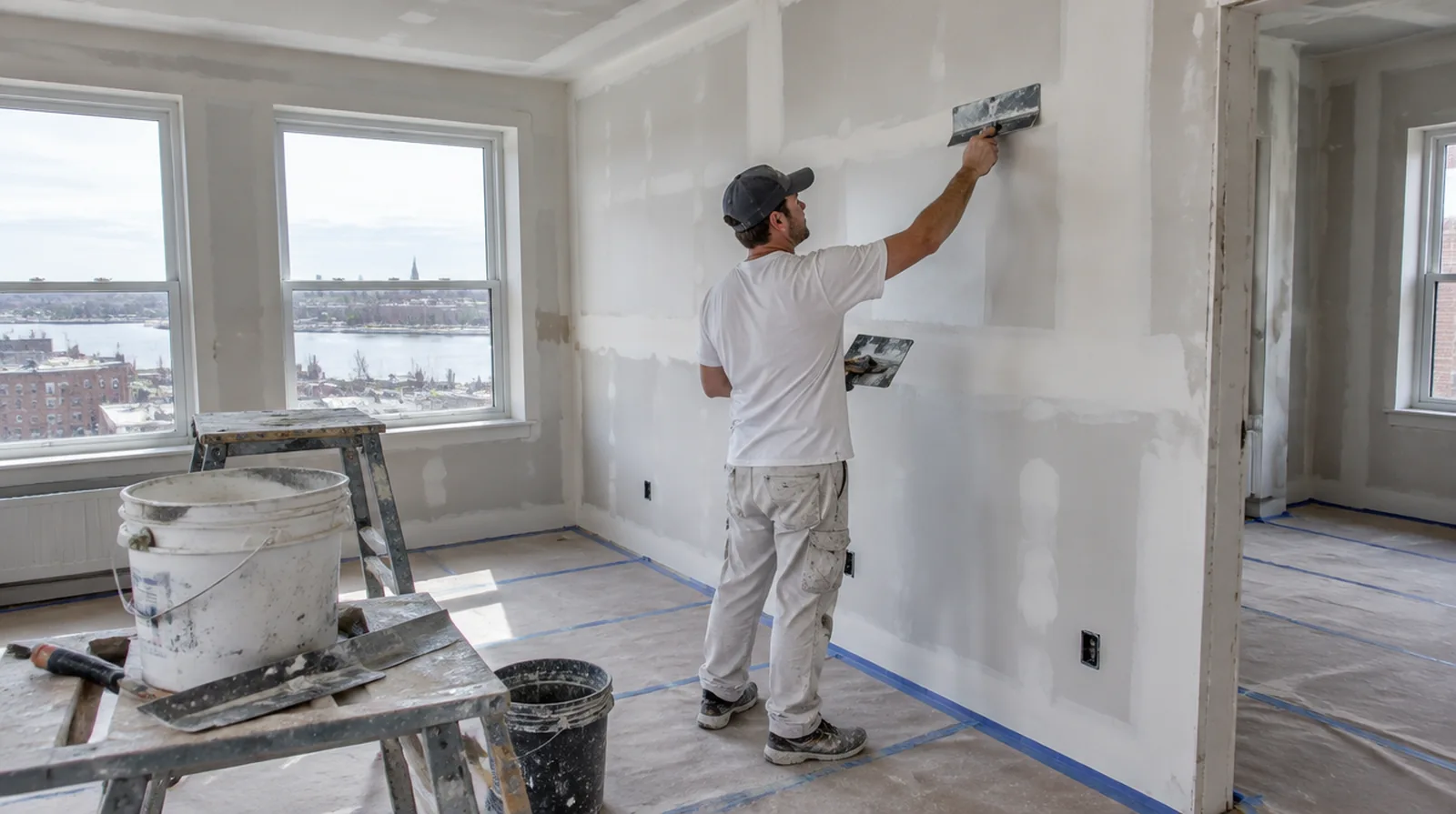
Let each coat dry
Room temperature, humidity and airflow influence drying time across a broad coated surface. A rushed next coat can drag or disturb material that has not set up sufficiently. When the project space includes a doorway, check the clearance for panel movement as well as the amount of space available for finishing tools.
Apply controlled thin layers
A skim coat is intended to refine the surface rather than build a heavy unsupported layer. More than one pass may be necessary where the original texture creates deeper low points. If the coating stability is unclear, assess which layers are adequately bonded and which ought to be removed instead of simply hidden beneath new material.
Work around trim carefully
Baseboards, frames and fixed fittings create edges that need neat transitions and protection. Decide whether trim removal is needed or whether a neat stop against it is acceptable. For a room that stays in use, set a workable boundary around construction while retaining the access people need for normal daily activities.
Prime before decoration
Fresh skim compound needs an suitable primer before the finish paint is applied. Primer helps equalize absorption and may reveal small touch ups that should be resolved before the final coat. When the history of a repair is uncertain, note when it became visible and whether its appearance has altered across distinct seasons.
Check underlying movement
A skim coat improves the surface profile but does not repair structural movement or unstable board. Recurring cracks ought to be investigated and reinforced appropriately before the finish is covered. If the proposal requires return visits, identify the purpose of each stage and the intervals during which finishing material needs to remain undisturbed.
Choose paint with the finish
Higher sheen coatings can emphasize small variations that a matte finish makes less obvious. Talk through the final decorative plan before deciding how extensive the surface preparation needs to be. Where light reflects along the wall, inspect the complete plane instead of limiting the review to the edge immediately next to the repaired section.
Refine with minimal sanding
Good application reduces the amount of sanding needed to achieve a uniform finish. Dust control should still be planned because broad wall work could produce fine airborne particles. If occupancy must resume on a certain day, include the later primer and paint stages in the timetable as well as drywall installation and finishing.
Stabilize torn paper
Wet finishing material can lift damaged paper if the exposed area has not been suitably prepared. Stabilize those paper defects with an suitable treatment before beginning the broad skim application. For an initial assessment from pictures, provide an overall room photograph and a detailed view of the defect so both context and scale are apparent.
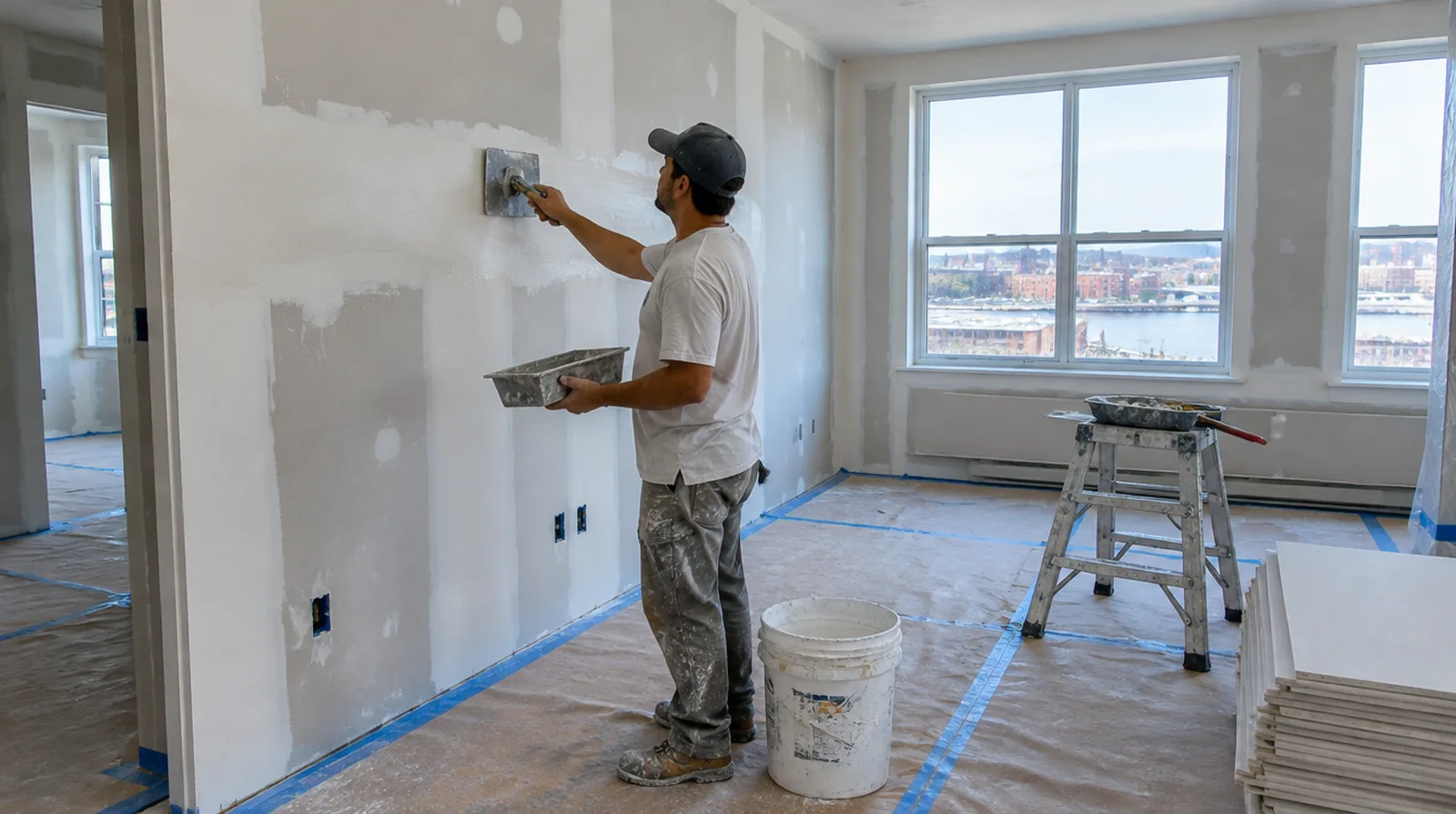
Assess the existing coating
Loose paint and unstable layers need attention before a thin skim can bond reliably. Separate peeling or poorly bonded material from a stable wall that merely needs smoothing. If the wall work belongs to a broader renovation, coordinate its order with flooring, cabinetry and trim instead of scheduling finishing in isolation.
Clean and prepare the wall
Dust, grease and incompatible residues can interfere with adhesion. Select cleaning and any necessary bonding preparation according to the actual surface condition. Before comparing two proposals, check that both include the same protection, finishing and cleanup boundaries instead of comparing totals alone.
Project context in Fall River
In a Fall River triple-decker, a ceiling stain on the first floor often traces back to a bathroom two levels up. A ceiling patch beside an old plaster medallion or crown needs careful masking to avoid damaging the detail.
Scope questions before finishing
If the current finish is unusual, keep a small reference sample or a close photograph to support the discussion about blending and restoration.
If materials must cross common building areas, plan the protection and access route so other occupants are not needlessly obstructed by deliveries.
When the history of a repair is uncertain, note when it became visible and whether its appearance has altered across distinct seasons.
When the same defect has returned, share information about previous repair methods so the next assessment can consider why they did not last.
If the ceiling or wall includes fittings, identify the person responsible for removing and reinstalling each item before the work begins.
At a ceiling or wall containing fittings, assign removal and reinstatement duties for the affected devices before repair access is needed.
When photographs are used for an initial discussion, include a wide room view as well as a close view so scale and surrounding finishes are understandable.
For walls beside bright windows, review a dry sample from an oblique angle as well as looking straight at the repaired surface.
If scheduling is the main concern, separate hands on labor from drying intervals instead of treating every visit as a full day of active work.
For an older repair with no clear history, describe when the mark first appeared and whether it has changed through more than one season.
If the surface condition is uncertain, allow for an assessment that can distinguish stable material from layers that should not be covered.
At a repair beside an opening, allow clearance for moving board through the doorway and space to use the finishing tools effectively.
Explore the Fall River drywall overview for related options, or read the project planning information before arranging the next stage.
More planning details for Fall River
A moisture-resistant board and a good primer help kitchen and bathroom ceilings stand up to condensation. Original plaster in older Fall River apartments usually needs a wider skim so a new patch sits flush. Converted mill spaces along the Quequechan River often pair brick walls with new partitions that meet at uneven edges.